

Arsedal® is indicated for induction of remission, and consolidation in adult patients with:
- Newly diagnosed low-to-intermediate risk acute promyelocytic leukaemia (APL)
(white blood cell count, ≤ 10 × 10³/µl) in combination with all-trans-retinoic acid (ATRA) - Relapsed/refractory acute promyelocytic leukaemia (APL) (previous treatment should have included a retinoid and chemotherapy)
characterised by the presence of the t(15;17) translocation and/or the presence of the promyelocytic leukaemia/retinoic-acid-receptor-alpha (PML/RAR-alpha) gene.
The response rate of other acute myelogenous leukaemia subtypes to arsenic trioxide has not been examined.
- Newly diagnosed low-to-intermediate risk acute promyelocytic leukaemia (APL)
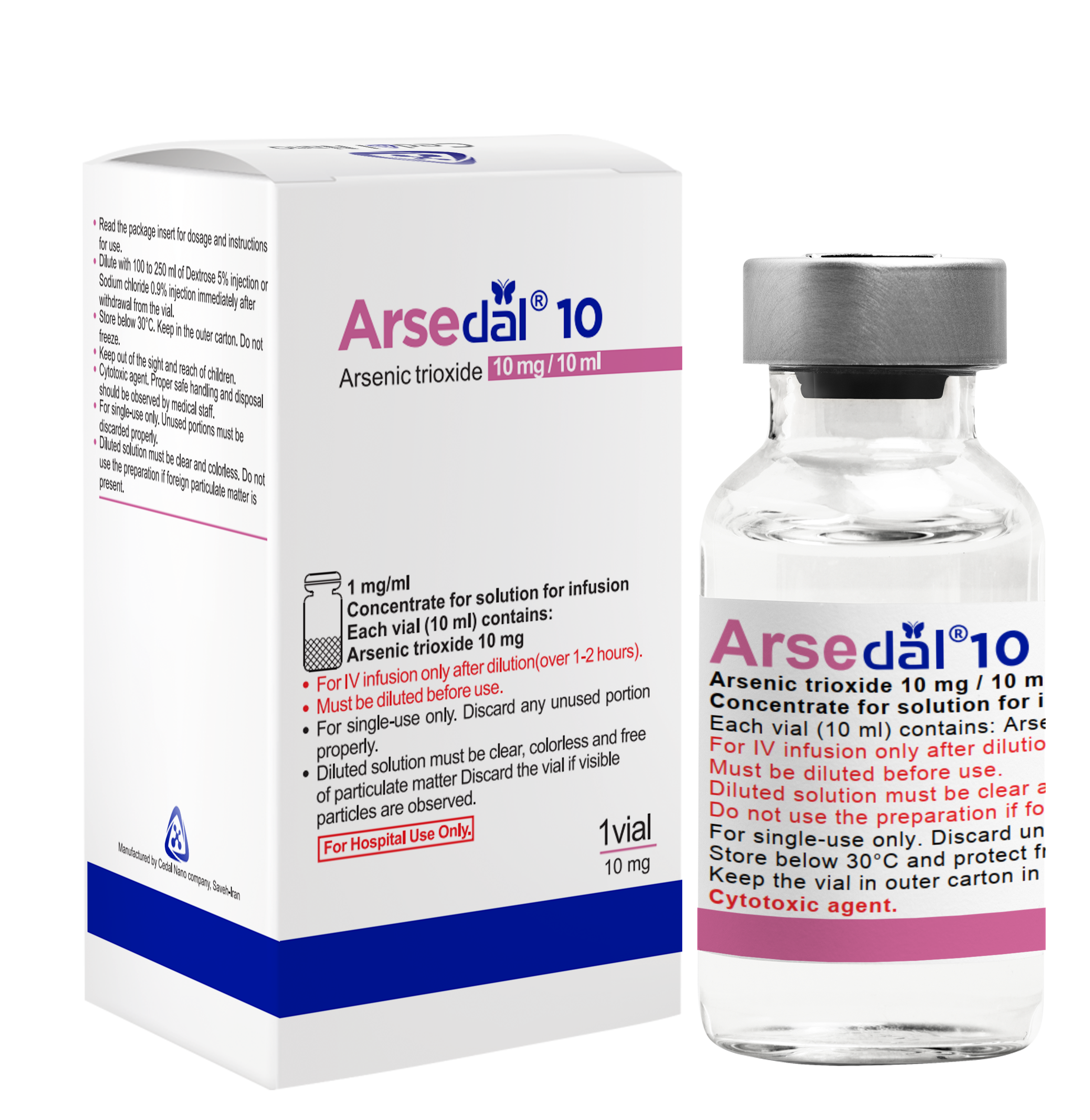
Arsedal®
Generic Name
Arsenic trioxide
Brand Name
®Arsedal
Drug Class
Concentrate for Solution for Infusion
Dosage Form
10mg/10ml
Indications
Contradications
Warnings and Precautions
Dosage and Administration
Adverse Reactions
Drug Interactions
Use in pregnancy and lactation
Storage Conditions
Indications
Contradications
Hypersensitivity to the active substance or to any of the excipients.
Warnings and Precautions
Clinically unstable APL patients are especially at risk and will require more frequent monitoring of electrolyte and glycaemia levels as well as more frequent haematologic, hepatic, renal and coagulation parameter tests.
Leukocyte activation syndrome (APL differentiation syndrome)
27 % of patients with APL, in the relapsed/refractory setting, treated with arsenic trioxide have experienced symptoms similar to a syndrome called the retinoic-acid-acute promyelocytic leukaemia (RA-APL) or APL differentiation syndrome, characterised by fever, dyspnoea, weight gain, pulmonary infiltrates and pleural or pericardial effusions, with or without leucocytosis. This syndrome can be fatal.
In newly diagnosed APL patients treated with arsenic trioxide and all-trans-retinoic acid (ATRA), APL differentiation syndrome was observed in 19 % including 5 severe cases.
At the first signs that could suggest the syndrome (unexplained fever, dyspnoea and/or weight gain, abnormal chest auscultatory findings or radiographic abnormalities), treatment with Arsedal® must be temporarily discontinued and high-dose steroids (dexamethasone 10 mg intravenously twice a day) must be immediately initiated, irrespective of the leukocyte count and continued for at least 3 days or longer until signs and symptoms have abated. If clinically justified/required, concomitant diuretic therapy is also recommended.
The majority of patients do not require permanent termination of Arsedal® therapy during treatment of the APL differentiation syndrome. As soon as signs and symptoms have subsided, treatment with Arsedal® can be resumed at 50 % of the previous dose during the first 7 days. Thereafter, in the absence of worsening of the previous toxicity, Arsedal® might be resumed at full dosage. In the case of the reappearance of symptoms Arsedal® should be reduced to the previous dosage.
In order to prevent the development of the APL differentiation syndrome during induction treatment, prednisone (0.5 mg/kg body weight per day throughout induction treatment) may be administered from day 1 of Arsedal® application to the end of induction therapy in APL patients.
It is recommended that chemotherapy not be added to treatment with steroids since there is no experience with administration of both steroids and chemotherapy during treatment of the leukocyte activation syndrome due to Arsedal®.
Post-marketing experience suggests that a similar syndrome may occur in patients with other types of malignancy. Monitoring and management for these patients should be as described above.
Electrocardiogram (ECG) abnormalities
Arsenic trioxide can cause QT interval prolongation and complete atrioventricular block. QT prolongation can lead to a torsade de pointes-type ventricular arrhythmia, which can be fatal. Previous treatment with anthracyclines may increase the risk of QT prolongation. The risk for torsade de pointes is related to the extent of QT prolongation, concomitant administration of QT prolonging medicinal products (such as class Ia and III antiarrhythmics (e.g. quinidine, amiodarone, sotalol, dofetilide), antipsychotics (e.g. thioridazine), antidepressants (e.g. amitriptyline), some macrolides (e.g. erythromycin), some antihistamines (e.g. terfenadine and astemizole), some quinolone antibiotics (e.g. sparfloxacin), and other individual medicinal products known to increase QT interval (e.g. cisapride)), a history of torsade de pointes, pre-existing QT interval prolongation, congestive heart failure, administration of potassium-wasting diuretics, amphotericin B or other conditions that result in hypokalaemia or hypomagnesaemia.
In clinical trials, in the relapsed/refractory setting, 40 % of patients treated with Arsedal® experienced at least one QT corrected (QTc) interval prolongation greater than 500 msec. Prolongation of the QTc was observed between 1 and 5 weeks after Arsedal® infusion, and then returned to baseline by the end of 8 weeks after Arsedal® infusion. One patient (receiving multiple, concomitant medicinal products, including amphotericin B) had asymptomatic torsade de pointes during induction therapy for relapsed APL with arsenic trioxide. In newly diagnosed APL patients 15.6 % showed QTc prolongation with arsenic trioxide in combination with ATRA. In one newly diagnosed patient induction treatment was terminated because of severe prolongation of the QTc interval and electrolyte abnormalities on day 3 of induction treatment.
ECG and electrolyte monitoring recommendations
Prior to initiating therapy with Arsedal®, a 12-lead ECG must be performed and serum electrolytes (potassium, calcium, and magnesium) and creatinine must be assessed; pre-existing electrolyte abnormalities must be corrected and, if possible, medicinal products that are known to prolong the QT interval must be discontinued. Patients with risk factors of QTc prolongation or risk factors of torsade de pointes should be monitored with continuous cardiac monitoring (ECG). For QTc greater than 500 msec, corrective measures must be completed and the QTc reassessed with serial ECGs and, if available, a specialist advice could be sought prior to considering using Arsedal®.
During therapy with Arsedal®, potassium concentrations must be kept above 4 mEq/l and magnesium concentrations must be kept above 1.8 mg/dl. Patients who reach an absolute QT interval value > 500 msec must be reassessed and immediate action must be taken to correct concomitant risk factors, if any, while the risk/benefit of continuing versus suspending Arsedal® therapy must be considered.
If syncope, rapid or irregular heartbeat develops, the patient must be hospitalised and monitored continuously, serum electrolytes must be assessed, Arsedal® therapy must be temporarily discontinued until the QTc interval regresses to below 460 msec, electrolyte abnormalities are corrected, and the syncope and irregular heartbeat cease.
After recovery, treatment should be resumed at 50 % of the preceding daily dose. If QTc prolongation does not recur within 7 days of restarting treatment at the reduced dose, treatment with Arsedal® can be resumed at 0.11 mg/kg body weight per day for a second week. The daily dose can be escalated back to 100 % of the original dose if no prolongation occurs.
There are no data on the effect of arsenic trioxide on the QTc interval during the infusion. Electrocardiograms must be obtained twice weekly, and more frequently for clinically unstable patients, during induction and consolidation.
Hepatotoxicity (grade 3 or greater)
In newly diagnosed patients with low to intermediate risk APL 63.2 % developed grade 3 or 4 hepatic toxic effects during induction or consolidation treatment with arsenic trioxide in combination with ATRA (see section 4.8). However, toxic effects resolved with temporary discontinuation of either arsenic trioxide, ATRA or both. Treatment with Arsedal® must be discontinued before the scheduled end of therapy at any time that a hepatotoxicity grade 3 or greater on the National Cancer Institute Common Toxicity Criteria is observed. As soon as bilirubin and/or SGOT and/or alkaline phosphatase are decreased to below 4 times the normal upper level, treatment with Arsedal® should be resumed at 50 % of the previous dose during the first 7 days. Thereafter, in absence of worsening of the previous toxicity, Arsedal® should be resumed at full dosage. In case of reappearance of hepatotoxicity, Arsedal® must be permanently discontinued.
Dose delay and modification
Treatment with Arsedal® must be temporarily interrupted before the scheduled end of therapy at any time that a toxicity grade 3 or greater on the National Cancer Institute Common Toxicity Criteria is observed and judged to be possibly related to Arsedal® treatment.
Laboratory tests
The patient’s electrolyte and glycaemia levels, as well as haematologic, hepatic, renal and coagulation parameter tests must be monitored at least twice weekly, and more frequently for clinically unstable patients during the induction phase and at least weekly during the consolidation phase.
Renal impairment
Since no data are available across all renal impairment groups, caution is advised in the use of Arsedal® in patients with renal impairment. The experience in patients with severe renal impairment is insufficient to determine if dose adjustment is required. The use of Arsedal® in patients on dialysis has not been studied.
Hepatic impairment
Since no data are available across all hepatic impairment groups and hepatotoxic effects may occur during the treatment with arsenic trioxide caution is advised in the use of Arsedal® in patients with hepatic impairment. The experience in patients with severe hepatic impairment is insufficient to determine if dose adjustment is required.
Elderly
There is limited clinical data on the use of Arsedal® in the elderly population. Caution is needed in these patients.
Hyperleucocytosis
Treatment with arsenic trioxide has been associated with the development of hyperleucocytosis (≥ 10 x 103/μl) in some relapsed/refractory APL patients. There did not appear to be a relationship between baseline white blood cell (WBC) counts and development of hyperleucocytosis nor did there appear to be a correlation between baseline WBC count and peak WBC counts. Hyperleucocytosis was never treated with additional chemotherapy and resolved on continuation of Arsedal®. WBC counts during consolidation were not as high as during induction treatment and were < 10 x 103/μl, except in one patient who had a WBC count of 22 x 103/μl during consolidation. Twenty relapsed/refractory APL patients (50 %) experienced leucocytosis; however, in all these patients, the WBC count was declining or had normalized by the time of bone marrow remission and cytotoxic chemotherapy or leucopheresis was not required. In newly diagnosed patients with low to intermediate risk APL leucocytosis developed during induction therapy in 35 of 74 (47 %) patients. However all cases were successfully managed with hydroxyurea therapy.
In newly diagnosed and relapsed/refractory APL patients who develop sustained leucocytosis after initiation of therapy, hydroxyurea should be administered. Hydroxyurea should be continued at a given dose to keep the white blood cell count ≤ 10 x 103/μl and subsequently tapered.
Development of second primary malignancies
The active ingredient of Arsedal®, arsenic trioxide, is a human carcinogen. Monitor patients for the development of second primary malignancies.
Encephalopathy
Cases of encephalopathy were reported with treatment with arsenic trioxide. Wernicke encephalopathy after arsenic trioxide treatment was reported in patients with vitamin B1 deficiency. Patients at risk of B1 deficiency should be closely monitored for signs and symptoms of encephalopathy after arsenic trioxide initiation. Some cases recovered with vitamin B1 supplementation.
Dosage and Administration
Arsedal® must be administered under the supervision of a physician who is experienced in the management of acute leukaemias, and the special monitoring procedures must be followed.
Posology
The same dose is recommended for adults and elderly.
Newly diagnosed low-to-intermediate risk acute promyelocytic leukaemia (APL)
Induction treatment schedule
Arsedal® must be administered intravenously at a dose of 0.15 mg/kg/day, given daily until complete remission is achieved. If complete remission has not occurred by day 60, dosing must be discontinued.
Consolidation schedule
Arsedal® must be administered intravenously at a dose of 0.15 mg/kg/day, 5 days per week. Treatment should be continued for 4 weeks on and 4 weeks off, for a total of 4 cycles.
Relapsed/refractory acute promyelocytic leukaemia (APL)
Induction treatment schedule
Arsedal® must be administered intravenously at a fixed dose of 0.15 mg/kg/day given daily until complete remission is achieved (less than 5% blasts present in cellular bone marrow with no evidence of leukaemic cells). If complete remission has not occurred by day 50, dosing must be discontinued.
Consolidation schedule
Consolidation treatment must begin 3 to 4 weeks after completion of induction therapy. Arsedal® is to be administered intravenously at a dose of 0.15 mg/kg/day for 25 doses given 5 days per week, followed by 2 days interruption, repeated for 5 weeks.
Dose delay, modification and reinitiation
Treatment with Arsedal® must be temporarily interrupted before the scheduled end of therapy at any time that a toxicity grade 3 or greater on the National Cancer Institute Common Toxicity Criteria is observed and judged to be possibly related to Arsedal® treatment. Patients who experience such reactions that are considered Arsedal® related must resume treatment only after resolution of the toxic event or after recovery to baseline status of the abnormality that prompted the interruption. In such cases, treatment must resume at 50 % of the preceding daily dose. If the toxic event does not recur within 7 days of restarting treatment at the reduced dose, the daily dose can be escalated back to 100 % of the original dose. Patients who experience a recurrence of toxicity must be removed from treatment.
Special populations
Hepatic impairment
Since no data are available across all hepatic impairment groups and hepatotoxic effects may occur during the treatment with Arsedal®, caution is advised in the use of Arsedal® in patients with hepatic impairment.
Renal impairment
Since no data are available across all renal impairment groups, caution is advised in the use of Arsedal® in patients with renal impairment.
Paediatric population
The safety and efficacy of Arsedal® in children aged up to 17 years has not been established. Currently available data for children aged 5 to 16 years are described in section 5.1 but no recommendation on a posology can be made. No data are available for children under 5 years.
Method of administration
Arsedal® must be administered intravenously over 1–2 hours. The infusion duration may be extended up to 4 hours if vasomotor reactions are observed. A central venous catheter is not required.
Patients must be hospitalised at the beginning of treatment due to symptoms of disease and to ensure adequate monitoring.
Aseptic technique must be strictly observed throughout handling of Arsedal® since no preservative is present.
Arsedal® must be diluted with 100 to 250 ml of glucose 50 mg/ml (5 %) solution for injection or sodium chloride 9 mg/ml (0.9 %) solution for injection immediately after withdrawal from the ampoule or vial.
Arsedal® must not be mixed with or concomitantly administered in the same intravenous line with other medicinal products.
The diluted solution must be clear and colourless. All parenteral solutions must be inspected visually for particulate matter and discoloration prior to administration. Do not use the preparation if foreign particulate matter is present.
CONTRAINDICATIONS:
Hypersensitivity to the active substance or to any of the excipients.Top of Form
WARNINGS AND PRECAUTION
Clinically unstable APL patients are especially at risk and will require more frequent monitoring of electrolyte and glycaemia levels as well as more frequent haematologic, hepatic, renal and coagulation parameter tests.
Leukocyte activation syndrome (APL differentiation syndrome)
27 % of patients with APL, in the relapsed/refractory setting, treated with arsenic trioxide have experienced symptoms similar to a syndrome called the retinoic-acid-acute promyelocytic leukaemia (RA-APL) or APL differentiation syndrome, characterised by fever, dyspnoea, weight gain, pulmonary infiltrates and pleural or pericardial effusions, with or without leucocytosis. This syndrome can be fatal.
In newly diagnosed APL patients treated with arsenic trioxide and all-trans-retinoic acid (ATRA), APL differentiation syndrome was observed in 19 % including 5 severe cases.
At the first signs that could suggest the syndrome (unexplained fever, dyspnoea and/or weight gain, abnormal chest auscultatory findings or radiographic abnormalities), treatment with Arsedal® must be temporarily discontinued and high-dose steroids (dexamethasone 10 mg intravenously twice a day) must be immediately initiated, irrespective of the leukocyte count and continued for at least 3 days or longer until signs and symptoms have abated. If clinically justified/required, concomitant diuretic therapy is also recommended.
The majority of patients do not require permanent termination of Arsedal® therapy during treatment of the APL differentiation syndrome. As soon as signs and symptoms have subsided, treatment with Arsedal® can be resumed at 50 % of the previous dose during the first 7 days. Thereafter, in the absence of worsening of the previous toxicity, Arsedal® might be resumed at full dosage. In the case of the reappearance of symptoms Arsedal® should be reduced to the previous dosage.
In order to prevent the development of the APL differentiation syndrome during induction treatment, prednisone (0.5 mg/kg body weight per day throughout induction treatment) may be administered from day 1 of Arsedal® application to the end of induction therapy in APL patients.
It is recommended that chemotherapy not be added to treatment with steroids since there is no experience with administration of both steroids and chemotherapy during treatment of the leukocyte activation syndrome due to Arsedal®.
Post-marketing experience suggests that a similar syndrome may occur in patients with other types of malignancy. Monitoring and management for these patients should be as described above.
Electrocardiogram (ECG) abnormalities
Arsenic trioxide can cause QT interval prolongation and complete atrioventricular block. QT prolongation can lead to a torsade de pointes-type ventricular arrhythmia, which can be fatal. Previous treatment with anthracyclines may increase the risk of QT prolongation. The risk for torsade de pointes is related to the extent of QT prolongation, concomitant administration of QT prolonging medicinal products (such as class Ia and III antiarrhythmics (e.g. quinidine, amiodarone, sotalol, dofetilide), antipsychotics (e.g. thioridazine), antidepressants (e.g. amitriptyline), some macrolides (e.g. erythromycin), some antihistamines (e.g. terfenadine and astemizole), some quinolone antibiotics (e.g. sparfloxacin), and other individual medicinal products known to increase QT interval (e.g. cisapride)), a history of torsade de pointes, pre-existing QT interval prolongation, congestive heart failure, administration of potassium-wasting diuretics, amphotericin B or other conditions that result in hypokalaemia or hypomagnesaemia.
In clinical trials, in the relapsed/refractory setting, 40 % of patients treated with Arsedal® experienced at least one QT corrected (QTc) interval prolongation greater than 500 msec. Prolongation of the QTc was observed between 1 and 5 weeks after Arsedal® infusion, and then returned to baseline by the end of 8 weeks after Arsedal® infusion. One patient (receiving multiple, concomitant medicinal products, including amphotericin B) had asymptomatic torsade de pointes during induction therapy for relapsed APL with arsenic trioxide. In newly diagnosed APL patients 15.6 % showed QTc prolongation with arsenic trioxide in combination with ATRA. In one newly diagnosed patient induction treatment was terminated because of severe prolongation of the QTc interval and electrolyte abnormalities on day 3 of induction treatment.
ECG and electrolyte monitoring recommendations
Prior to initiating therapy with Arsedal®, a 12-lead ECG must be performed and serum electrolytes (potassium, calcium, and magnesium) and creatinine must be assessed; pre-existing electrolyte abnormalities must be corrected and, if possible, medicinal products that are known to prolong the QT interval must be discontinued. Patients with risk factors of QTc prolongation or risk factors of torsade de pointes should be monitored with continuous cardiac monitoring (ECG). For QTc greater than 500 msec, corrective measures must be completed and the QTc reassessed with serial ECGs and, if available, a specialist advice could be sought prior to considering using Arsedal®.
During therapy with Arsedal®, potassium concentrations must be kept above 4 mEq/l and magnesium concentrations must be kept above 1.8 mg/dl. Patients who reach an absolute QT interval value > 500 msec must be reassessed and immediate action must be taken to correct concomitant risk factors, if any, while the risk/benefit of continuing versus suspending Arsedal® therapy must be considered.
If syncope, rapid or irregular heartbeat develops, the patient must be hospitalised and monitored continuously, serum electrolytes must be assessed, Arsedal® therapy must be temporarily discontinued until the QTc interval regresses to below 460 msec, electrolyte abnormalities are corrected, and the syncope and irregular heartbeat cease.
After recovery, treatment should be resumed at 50 % of the preceding daily dose. If QTc prolongation does not recur within 7 days of restarting treatment at the reduced dose, treatment with Arsedal® can be resumed at 0.11 mg/kg body weight per day for a second week. The daily dose can be escalated back to 100 % of the original dose if no prolongation occurs.
There are no data on the effect of arsenic trioxide on the QTc interval during the infusion. Electrocardiograms must be obtained twice weekly, and more frequently for clinically unstable patients, during induction and consolidation.
Hepatotoxicity (grade 3 or greater)
In newly diagnosed patients with low to intermediate risk APL 63.2 % developed grade 3 or 4 hepatic toxic effects during induction or consolidation treatment with arsenic trioxide in combination with ATRA (see section 4.8). However, toxic effects resolved with temporary discontinuation of either arsenic trioxide, ATRA or both. Treatment with Arsedal® must be discontinued before the scheduled end of therapy at any time that a hepatotoxicity grade 3 or greater on the National Cancer Institute Common Toxicity Criteria is observed. As soon as bilirubin and/or SGOT and/or alkaline phosphatase are decreased to below 4 times the normal upper level, treatment with Arsedal® should be resumed at 50 % of the previous dose during the first 7 days. Thereafter, in absence of worsening of the previous toxicity, Arsedal® should be resumed at full dosage. In case of reappearance of hepatotoxicity, Arsedal® must be permanently discontinued.
Dose delay and modification
Treatment with Arsedal® must be temporarily interrupted before the scheduled end of therapy at any time that a toxicity grade 3 or greater on the National Cancer Institute Common Toxicity Criteria is observed and judged to be possibly related to Arsedal® treatment.
Laboratory tests
The patient’s electrolyte and glycaemia levels, as well as haematologic, hepatic, renal and coagulation parameter tests must be monitored at least twice weekly, and more frequently for clinically unstable patients during the induction phase and at least weekly during the consolidation phase.
Renal impairment
Since no data are available across all renal impairment groups, caution is advised in the use of Arsedal® in patients with renal impairment. The experience in patients with severe renal impairment is insufficient to determine if dose adjustment is required. The use of Arsedal® in patients on dialysis has not been studied.
Hepatic impairment
Since no data are available across all hepatic impairment groups and hepatotoxic effects may occur during the treatment with arsenic trioxide caution is advised in the use of Arsedal® in patients with hepatic impairment. The experience in patients with severe hepatic impairment is insufficient to determine if dose adjustment is required.
Elderly
There is limited clinical data on the use of Arsedal® in the elderly population. Caution is needed in these patients.
Hyperleucocytosis
Treatment with arsenic trioxide has been associated with the development of hyperleucocytosis (≥ 10 x 103/μl) in some relapsed/refractory APL patients. There did not appear to be a relationship between baseline white blood cell (WBC) counts and development of hyperleucocytosis nor did there appear to be a correlation between baseline WBC count and peak WBC counts. Hyperleucocytosis was never treated with additional chemotherapy and resolved on continuation of Arsedal®. WBC counts during consolidation were not as high as during induction treatment and were < 10 x 103/μl, except in one patient who had a WBC count of 22 x 103/μl during consolidation. Twenty relapsed/refractory APL patients (50 %) experienced leucocytosis; however, in all these patients, the WBC count was declining or had normalized by the time of bone marrow remission and cytotoxic chemotherapy or leucopheresis was not required. In newly diagnosed patients with low to intermediate risk APL leucocytosis developed during induction therapy in 35 of 74 (47 %) patients. However all cases were successfully managed with hydroxyurea therapy.
In newly diagnosed and relapsed/refractory APL patients who develop sustained leucocytosis after initiation of therapy, hydroxyurea should be administered. Hydroxyurea should be continued at a given dose to keep the white blood cell count ≤ 10 x 103/μl and subsequently tapered.
Development of second primary malignancies
The active ingredient of Arsedal®, arsenic trioxide, is a human carcinogen. Monitor patients for the development of second primary malignancies.
Encephalopathy
Cases of encephalopathy were reported with treatment with arsenic trioxide. Wernicke encephalopathy after arsenic trioxide treatment was reported in patients with vitamin B1 deficiency. Patients at risk of B1 deficiency should be closely monitored for signs and symptoms of encephalopathy after arsenic trioxide initiation. Some cases recovered with vitamin B1 supplementation.
Adverse Reactions
>10%:
Cardiovascular: Tachycardia (55%), edema (40%), QT interval >500 msec (40%), chest pain (25%; grades 3/4: 5%), hypotension (25%; grades 3/4: 5%)
Central nervous system: Fatigue (63%), fever (63%), headache (60%), insomnia (43%), anxiety (30%), dizziness (23%), depression (20%), pain (15%)
Dermatologic: Dermatitis (43%), pruritus (33%), bruising (20%), dry skin (15%), erythema (13%)
Endocrine & metabolic: Hypokalemia (50%; grades 3/4: 13%), hyperglycemia (45%; grades 3/4: 13%), hypomagnesemia (45%; grades 3/4: 13%), hyperkalemia (18%; grades 3/4: 5%)
Gastrointestinal: Nausea (75%), abdominal pain (58%), vomiting (58%), diarrhea (53%), sore throat (35%), constipation (28%), anorexia (23%), appetite decreased (15%), weight gain (13%)
Genitourinary: Vaginal hemorrhage (13%)
Hematologic: Leukocytosis (50%; grades 3/4: 3%), APL differentiation syndrome (23%; grades 3/4: 8%), anemia (20%; grades 3/4: 5%), thrombocytopenia (18%; grades 3/4: 13%), febrile neutropenia (13%; grades 3/4: 8%)
Hepatic: ALT increased (20%; grades 3/4: 5%), AST increased (13%; grades 3/4: 3%)
Local: Injection site: Pain (20%), erythema (13%)
Neuromuscular & skeletal: Rigors (38%), arthralgia (33%), paresthesia (33%), myalgia (25%), bone pain (23%), back pain (18%), limb pain (13%), neck pain (13%), tremor (13%)
Respiratory: Cough (65%), dyspnea (53%; grades 3/4: 10%), epistaxis (25%), hypoxia (23%), pleural effusion (20%), sinusitis (20%), postnasal drip (13%), upper respiratory tract infection (13%), wheezing (13%)
Miscellaneous: Herpes simplex (13%), diaphoresis (13%)
1% to 10%:
Cardiovascular: Hypertension (10%), flushing (10%), pallor (10%), palpitation (10%), facial edema (8%), abnormal ECG (not QT prolongation) (8%), atrial dysrhythmia (5%), torsade de pointes (3%)
Central nervous system: Seizure (8%; grades 3/4: 5%), somnolence (8%), agitation (5%), coma (5%), confusion (5%)
Dermatologic: Hyperpigmentation (8%), petechia (8%), skin lesions (8%), urticaria (8%), local exfoliation (5%)
Endocrine & metabolic: Hypocalcemia (10%), hypoglycemia (8%), intermenstrual bleeding (8%), acidosis (5%)
Gastrointestinal: Dyspepsia (10%), loose stools (10%), abdominal distension (8%), abdominal tenderness (8%), caecitis (children: 8%), fecal incontinence (8%), gastrointestinal hemorrhage (8%), hemorrhagic diarrhea (8%), oral blistering (8%), weight loss (8%), xerostomia (8%), oral candidiasis (5%)
Genitourinary: Incontinence (5%)
Hematologic: Neutropenia (10%; grades 3/4: 10%), DIC (8%), hemorrhage (8%)
Local: Injection site edema (10%)
Neuromuscular & skeletal: Weakness (10%)
Ocular: Blurred vision (10%), eye irritation (10%), dry eye (8%), eyelid edema (5%), painful red eye (5%)
Otic: Earache (8%), tinnitus (5%)
Renal: Renal failure (8%; grades 3/4: 3%), renal impairment (8%), oliguria (5%)
Respiratory: Breath sounds decreased (10%), crepitations (10%), rales (10%), hemoptysis (8%), pulmonary edema (children: 8%), rhonchi (8%), tachypnea (8%), nasopharyngitis (5%)
Miscellaneous: Bacterial infection (8%), herpes zoster (8%), lymphadenopathy (8%), night sweats (8%), hypersensitivity (5%), sepsis (5%; grades 3/4: 5%)
<1% (Limited to important or life-threatening):
Acute respiratory distress syndrome, AV block, capillary leak syndrome, CHF, heart block, hypoalbuminemia, hyponatremia, hypophosphatemia, lipase increased, mitochondrial myopathy, pancytopenia, peripheral neuropathy, pneumonitis, pulmonary infiltrate, respiratory distress, stomatitis, ventricular extrasystoles, ventricular tachycardia
Drug Interactions
No formal assessments of pharmacokinetic interactions between Arsedal® and other therapeutic medicinal products have been conducted.
Medicinal products known to cause QT/QTc interval prolongation, hypokalaemia or hypomagnesaemia
QT/QTc prolongation is expected during treatment with arsenic trioxide, and torsade de pointes and complete heart block have been reported. Patients who are receiving, or who have received, medicinal products known to cause hypokalaemia or hypomagnesaemia, such as diuretics or amphotericin B, may be at higher risk for torsade de pointes. Caution is advised when Arsedal® is co-administered with other medicinal products known to cause QT/QTc interval prolongation such as macrolide antibiotics, the antipsychotic thioridazine, or medicinal products known to cause hypokalaemia or hypomagnesaemia.
Medicinal products known to cause hepatotoxic effects
Hepatotoxic effects may occur during the treatment with arsenic trioxide, caution is advised when Arsedal® is co-administered with other medicinal products known to cause hepatotoxic effects.
Other antileukaemic medicinal products
The influence of Arsedal® on the efficacy of other antileukaemic medicinal products is unknown.
Use in pregnancy and lactation
- Pregnancy
Arsenic trioxide has been shown to be embryotoxic and teratogenic in animal studies. There are no studies in pregnant women using Arsedal®. If this medicinal product is used during pregnancy or if the patient becomes pregnant while taking this product, the patient must be informed of the potential harm to the foetus. Arsenic trioxide may cause harm to an unborn baby. A pregnancy test should be performed before starting treatment. If you are pregnant or planning to become pregnant during treatment, notify your doctor immediately. Women of childbearing potential and men are advised to use effective methods of contraception during treatment and for a period after completing therapy.
- Breast-feeding
Arsenic is excreted in human milk. Because of the potential for serious adverse reactions in breast-feeding infants and children from Arsedal®, breast-feeding must be discontinued throughout administration.
- Fertility
No clinical or non-clinical fertility studies have been conducted with Arsedal®.
Storage Conditions
- List of excipients
Sodium hydroxide
Hydrochloric acid (for pH adjustment)
Water for injections
- Incompatibilities
In the absence of incompatibility studies, this medicinal product must not be mixed with other medicinal products except those mentioned in method and administration.
Store below 30°C. Keep in outer carton. Do not freeze.
The diluted solutions of arsenic trioxide are physically and chemically stable for 24 hours at room temperature or 48 hours when refrigerated.
From a microbiological point of view, the product must be used immediately. If not used immediately, in-use storage times and conditions prior to use are the responsibility of the user.
Special precautions for disposal and other handling
Procedure for proper disposal
Arsedal® is for single-use only and any unused portions of each ampoule or of each vial must be discarded properly. Do not save any unused portions for later administration.Any unused medicinal product, any items that come into contact with the product or waste material must be disposed of in accordance with local requirements.