

Fludacedal® is indicated for the treatment of adult patients with B-cell chronic lymphocytic leukemia (CLL) who have not responded to or whose disease has progressed during treatment with at least one standard alkylating-agent containing regimen. The safety and effectiveness of Fludacedal® in previously untreated or non-refractory patients with CLL have not been established.
(PIL)
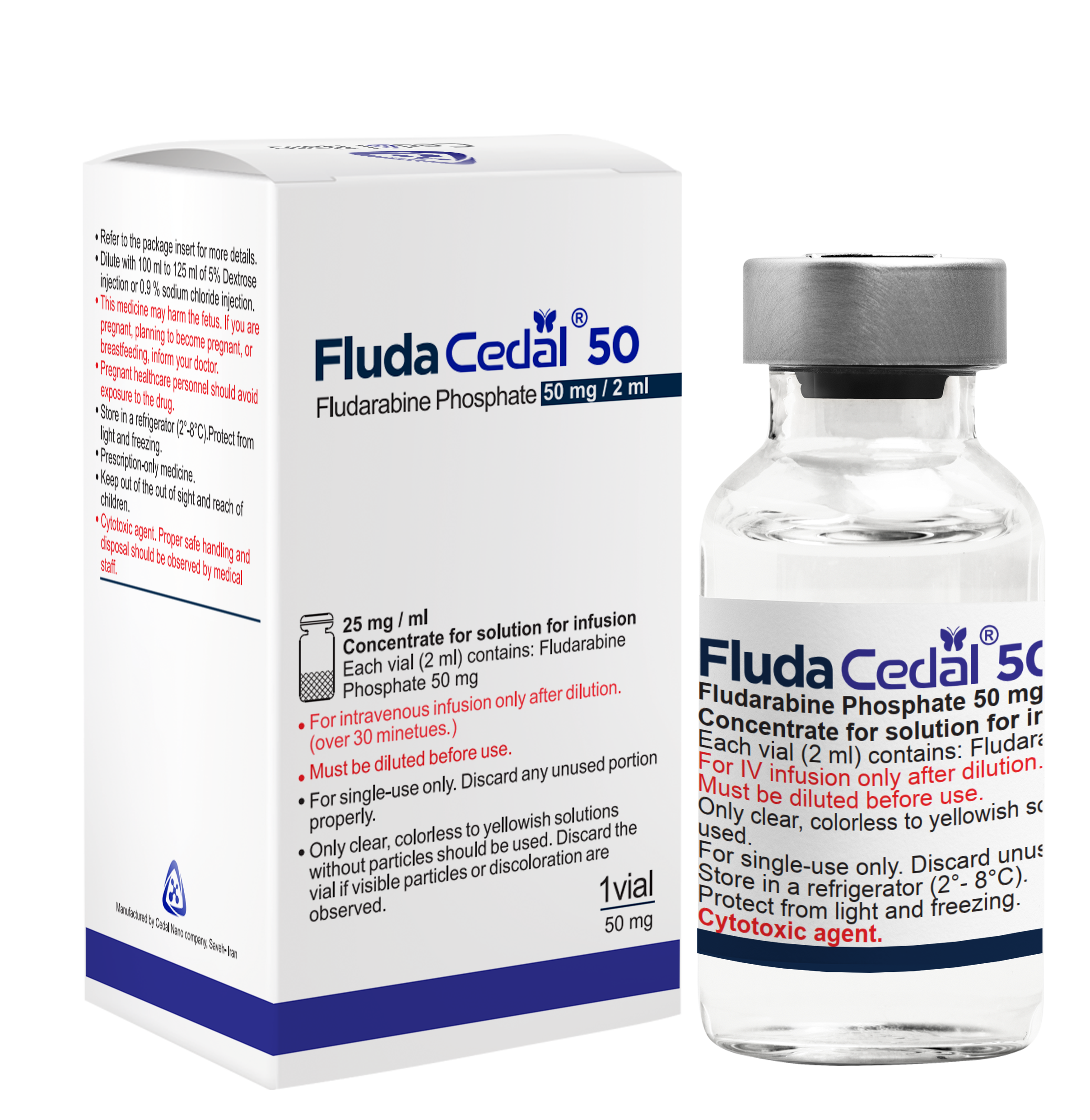
FludaCedal®
Generic Name
Fludarabine Phosphate
Brand Name
®FludaCedal
Drug Class
Concentrate for Solution for Infusion
Dosage Form
25mg/ml
Indications
Contradications
Warnings and Precautions
Dosage and Administration
Adverse Reactions
Drug Interactions
Use in pregnancy and lactation
Storage Conditions
Indications
Contradications
None
Warnings and Precautions
- Dose Dependent Neurologic Toxicities
There are clear dose dependent toxic effects seen with fludarabine phosphate. Dose levels approximately 4 times greater (96 mg/m²/day for 5 to 7 days) than that recommended for CLL (25 mg/m²/day for 5 days) were associated with a syndrome characterized by delayed blindness, coma and death. Symptoms appeared from 21 to 60 days following the last dose. Thirteen of 36 patients (36%) who received fludarabine phosphate at high doses (96 mg/m²/day for 5 to 7 days) developed this severe neurotoxicity. Similar severe central nervous system toxicity, including coma, seizures, agitation and confusion, has been reported in patients treated at doses in the range of the dose recommended for chronic lymphocytic leukemia. In post-marketing experience neurotoxicity has been reported to occur either earlier or later than in clinical trials (range 7 to 225 days).
The effect of chronic administration of fludarabine phosphate on the central nervous system is unknown; however, patients have received the recommended dose for up to 15 courses of therapy.
Fludarabine phosphate may reduce the ability to drive or use mechanical equipment, since fatigue, weakness, visual disturbances, confusion, agitation and seizures have been observed.
- Bone Marrow Suppression
Severe bone marrow suppression, notably anemia, thrombocytopenia and neutropenia, has been reported in patients treated with fludarabine phosphate. In a Phase I study in adult solid tumor patients, the median time to nadir counts was 13 days (range, 3 to 25 days) for granulocytes and 16 days (range, 2 to 32 days) for platelets. Most patients had hematologic impairment at baseline either as a result of disease or as a result of prior myelosuppressive therapy.
Cumulative myelosuppression may be seen. While chemotherapy-induced myelosuppression is often reversible, administration of fludarabine phosphate requires careful hematologic monitoring.
Several instances of trilineage bone marrow hypoplasia or aplasia resulting in pancytopenia, sometimes resulting in death, have been reported in adult patients. The duration of clinically significant cytopenia in the reported cases has ranged from approximately 2 months to approximately 1 year. These episodes have occurred both in previously treated or untreated patients.
- Autoimmune Reactions
Instances of life-threatening and sometimes fatal autoimmune phenomena such as hemolytic anemia, autoimmune thrombocytopenia/thrombocytopenic purpura (ITP), Evans syndrome, and acquired hemophilia have been reported to occur after one or more cycles of treatment with fludarabine phosphate in patients with or without a previous history of autoimmune hemolytic anemia or a positive Coombs’ test and who may or may not be in remission from their disease. Steroids may or may not be effective in controlling these hemolytic episodes. The majority of patients rechallenged with fludarabine phosphate developed a recurrence in the hemolytic process. The mechanism(s) which predispose patients to the development of this complication has not been identified. Patients undergoing treatment with fludarabine phosphate should be evaluated and closely monitored for hemolysis. Discontinuation of therapy with fludarabine phosphate is recommended in case of hemolysis.
- Transfusion Associated Graft-Versus-Host Disease
Transfusion-associated graft-versus-host disease has been observed after transfusion of non-irradiated blood in fludarabine phosphate treated patients. Fatal outcome as a consequence of this disease has been reported. Therefore, to minimize the risk of transfusion-associated graft-versus-host disease, patients who require blood transfusion and who are undergoing, or have received, treatment with fludarabine phosphate should receive irradiated blood only.
- Pulmonary Toxicity
In a clinical investigation using fludarabine phosphate in combination with pentostatin (deoxycoformycin) for the treatment of refractory chronic lymphocytic leukemia (CLL) in adults, there was an unacceptably high incidence of fatal pulmonary toxicity. Therefore, the use of fludarabine phosphate in combination with pentostatin is not recommended.
- Male Fertility and Reproductive Outcomes
Males with female sexual partners of childbearing potential should use contraception during and after cessation of fludarabine phosphate therapy. Fludarabine phosphate may damage testicular tissue and spermatozoa. Possible sperm DNA damage raises concerns about loss of fertility and genetic abnormalities in fetuses. The duration of this effect is uncertain.
- Tumor Lysis
Tumor lysis syndrome has been associated with fludarabine phosphate treatment. This syndrome has been reported in CLL patients with large tumor burdens. Since fludarabine phosphate can induce a response as early as the first week of treatment, precautions should be taken in those patients at risk of developing this complication.
- Renal Impairment
Fludarabine phosphate must be administered cautiously in patients with renal impairment. The total body clearance of 2-fluoro-ara-A has been shown to be directly correlated with creatinine clearance. Patients with creatinine clearance 30 to 79 mL/min should have their fludarabine phosphate dose reduced and be monitored closely for excessive toxicity. Fludarabine phosphate should not be administered to patients with creatinine clearance less than 30 mL/min. In patients aged 65 years or older, creatinine clearance should be measured before start of treatment.
- Vaccination
During and after treatment with fludarabine phosphate, vaccination with live vaccines should be avoided.
Dosage and Administration
Recommended Dose
The recommended adult dose of Fludacedal® is 25 mg/m² administered intravenously over a period of approximately 30 minutes daily for five consecutive or delayed based on evidence of hematologic or nonhematologic toxicity. Physicians should consider delaying or discontinuing the drug if neurotoxicity occurs.
A number of clinical settings may predispose to increased toxicity from fludarabine phosphate. These include advanced age, renal impairment, and bone marrow impairment. Such patients should be monitored closely for excessive toxicity and the dose modified accordingly.
The optimal duration of treatment has not been clearly established. It is recommended that three additional cycles of fludarabine phosphate be administered following the achievement of a maximal response and then the drug should be discontinued.
Renal Impairment
Adjustments to the starting dose are recommended to provide appropriate drug exposure in patients with creatinine clearance 30 to 79 mL/min, as estimated by the Cockcroft-Gault equations. These adjustments are based on a pharmacokinetic study in patients with renal impairment. Fludarabine phosphate injection should not be administered to patients with creatinine clearance less than 30 mL/min.
Method of administration
The appropriate dose of Fludacedal® should then be withdrawn from the vial and added to a compatible IV fluid; in clinical studies, the drug was administered in 100 or 125 mL of 5% dextrose or 0.9% sodium chloride injection.
Adverse Reactions
>10%:
Cardiovascular: Edema (8% to 19%)
Central nervous system: Fatigue (10% to 38%), neurological signs and symptoms (doses >96 mg/m²/day for 5 to 7 days: 36%; doses <125 mg/m²/cycle: <1%; characterized by cortical blindness, coma, and paralysis; symptom onset may be delayed for 3 to 4 weeks), pain (20% to 22%), chills (11% to 19%), paresthesia (4% to 12%)
Dermatologic: Skin rash (15%), diaphoresis (1% to 13%)
Gastrointestinal: Nausea and vomiting (31% to 36%), anorexia (7% to 34%), diarrhea (13% to 15%), gastrointestinal hemorrhage (3% to 13%)
Genitourinary: Urinary tract infection (2% to 15%)
Hematologic & oncologic: Anemia (60%), neutropenia (grade 4: 59%; nadir: ~13 days), thrombocytopenia (55%; nadir: ~16 days), bone marrow depression (nadir: 10 to 14 days; recovery: 5 to 7 weeks; dose-limiting toxicity)
Infection: Infection (33% to 44%)
Neuromuscular & skeletal: Weakness (9% to 65%), myalgia (4% to 16%)
Ophthalmic: Visual disturbance (3% to 15%)
Respiratory: Cough (10% to 44%), pneumonia (16% to 22%), dyspnea (9% to 22%), upper respiratory tract infection (2% to 16%)
Miscellaneous: Fever (60% to 69%)
1% to 10%:
Cardiovascular: Angina pectoris (≤6%), cardiac arrhythmia (≤3%), cardiac failure (≤3%), cerebrovascular accident (≤3%), myocardial infarction (≤3%), supraventricular tachycardia (≤3%), deep vein thrombosis (1% to 3%), phlebitis (1% to 3%), aneurysm (≤1%), transient ischemic attacks (≤1%)
Central nervous system: Malaise (6% to 8%), headache (≤3%), sleep disorder (1% to 3%), cerebellar syndrome (≤1%), depression (≤1%), difficulty thinking (≤1%)
Dermatologic: Alopecia (≤3%), pruritus (1% to 3%), seborrhea (≤1%)
Endocrine & metabolic: Hyperglycemia (1% to 6%), dehydration (≤1%)
Gastrointestinal: Stomatitis (≤9%), cholelithiasis (≤3%), esophagitis (≤3%), constipation (1% to 3%), mucositis (≤2%), dysphagia (≤1%)
Genitourinary: Dysuria (3% to 4%), urinary hesitancy (≤3%), hematuria (2% to 3%), proteinuria (≤1%)
Hematologic & oncologic: Hemorrhage (≤1%), tumor lysis syndrome (≤1%)
Hepatic: Abnormal hepatic function tests (1% to 3%), hepatic failure (≤1%)
Hypersensitivity: Anaphylaxis (≤1%)
Neuromuscular & skeletal: Osteoporosis (≤2%), arthralgia (≤1%)
Otic: Hearing loss (2% to 6%)
Renal: Renal failure (≤1%), renal function test abnormality (≤1%)
Respiratory: Pharyngitis (≤9%), hypersensitivity pneumonitis (≤6%), hemoptysis (1% to 6%), sinusitis (≤5%), bronchitis (≤1%), epistaxis (≤1%), hypoxia (≤1%)
<1%, postmarketing, and/or case reports:
Acquired blood coagulation disorder, acute myelocytic leukemia (usually associated with prior or concurrent treatment with other anticancer agents), adult respiratory distress syndrome, agitation, autoimmune hemolytic anemia, autoimmune thrombocytopenia, blindness, bone marrow aplasia (trilineage), bone marrow depression (trilineage), cerebral hemorrhage, coma, confusion, Epstein-Barr-associated lymphoproliferative disorder, erythema multiforme, Evans syndrome, flank pain, hemorrhagic cystitis, herpes zoster (reactivation), hyperkalemia, hyperphosphatemia, hyperuricemia, hypocalcemia, immune thrombocytopenia (autoimmune), increased liver enzymes, interstitial pneumonitis, malignant neoplasm of skin (new-onset or exacerbation), metabolic acidosis, myelodysplastic syndrome (usually associated with prior or concurrent treatment with other anticancer agents), myelofibrosis, opportunistic infection, optic neuritis, optic neuropathy, pancreatic disease (pancreatic enzymes abnormal), pancytopenia, pemphigus, pericardial effusion, peripheral neuropathy, pneumonitis, progressive multifocal leukoencephalopathy (PML), pulmonary fibrosis, pulmonary hemorrhage, reactivation of latent Epstein-Barr virus, respiratory distress, respiratory failure, seizure, Stevens-Johnson syndrome, toxic epidermal necrolysis, urate crystalluria, wrist-drop.
Reporting of suspected adverse reactions
Reporting suspected adverse reactions after authorisation of the medicinal product is important. It allows continued monitoring of the benefit/risk balance of the medicinal product. Please report any adverse drug reactions via contacting Cedal Nano.
Drug Interactions
Pentostatin
The use of fludarabine phosphate in combination with pentostatin is not recommended due to the risk of fatal pulmonary toxicity.
Use in pregnancy and lactation
- Pregnancy
Based on its mechanism of action, fludarabine phosphate can cause fetal harm when administered to a pregnant woman. There are no adequate and well-controlled studies of fludarabine phosphate in pregnant women. In rats, repeated intravenous doses of fludarabine phosphate at 2.4 times and 7.2 times the recommended human IV dose (25 mg/m²) administered during organogenesis caused an increase in resorptions, 2 skeletal and visceral malformations (cleft palate, exencephaly, and fetal vertebrae deformities) and decreased fetal body weights. Maternal toxicity was not apparent at 2.4 times the human IV dose, and was limited to slight body weight decreases at 7.2 times the human IV dose. In rabbits, repeated intravenous doses of fludarabine phosphate at 3.8 times the human IV dose administered during organogenesis increased embryo and fetal lethality as indicated by increased resorptions and a decrease in live fetuses. A significant increase in malformations including cleft palate, hydrocephaly, adactyly, brachydactyly, fusions of the digits, diaphragmatic hernia, heart/great vessel defects, and vertebrae/rib anomalies were seen at all dose levels (≥ 0.5 times the human IV dose). If this drug is used during pregnancy, or if the patient becomes pregnant while taking this drug, the patient should be apprised of the potential hazard to the fetus. Women of childbearing potential should be advised to avoid becoming pregnant. Before initiating treatment, healthcare professionals must ensure that female patients of childbearing potential are not pregnant. Women who are capable of becoming pregnant should be advised to use effective contraception during treatment and for at least 6 months after the last dose. In addition, partners of patients (female or male) who may become pregnant should use effective contraceptive methods during treatment and for at least 3 months after the last dose of the medicinal product.
- Breastfeeding
It is not known whether fludarabine phosphate is excreted in human milk. Because many drugs are excreted in human milk and because of the potential for serious adverse reactions including tumorigenicity in nursing infants, breast-feeding should be stopped during treatment and for one week after the last dose of fludarabine phosphate.
- Pediatric Use
The Data submitted to the FDA was insufficient to establish efficacy in any childhood malignancy. Fludarabine phosphate was evaluated in 62 pediatric patients (median age 10, range 1 to 21) with refractory acute leukemia (45 patients) or solid tumors (17 patients). Limited pharmacokinetic data for fludarabine phosphate are available in children (ages 1 to 21 years). When fludarabine phosphate was administered as a loading dose over 10 minutes immediately followed by a 5-day continuous infusion, steady-state conditions were reached early.
The fludarabine phosphate regimen tested for pediatric lymphocytic leukemia (ALL) patients was a loading bolus of 10.5 mg/m²/day followed by a continuous infusion of 30.5 mg/m²/day for 5 days. In 12 pediatric patients with solid tumors, dose-limiting myelosuppression was observed with a loading dose of 8 mg/m²/day followed by a continuous infusion of 23.5 mg/m²/day for 5 days.
The maximum tolerated dose was a loading dose of 7 mg/m²/day followed by a continuous infusion of 20 mg/m²/day for 5 days. Treatment toxicity included bone marrow suppression. Platelet counts appeared to be more sensitive to the effects of fludarabine phosphate than hemoglobin and white blood cell counts.
Other adverse events included fever, chills, asthenia, rash, nausea, vomiting, diarrhea, and infection. There were no reported occurrences of peripheral neuropathy or pulmonary hypersensitivity reaction.
- Patients with Renal Impairment
The total body clearance of the principal metabolite 2-fluoro-ara-A correlated with the creatinine clearance, indicating the importance of the renal excretion pathway for the elimination of the drug. Renal clearance represents approximately 40% of the total body clearance.
Patients with creatinine clearance 30 to 79 mL/min should have their fludarabine phosphate dose reduced and be monitored closely for excessive toxicity.
Storage Conditions
- Store in a refrigerator (2°–8°C). Protect from light and freezing.
- Retain in carton until time of use.
- Only clear, colorless to yellowish solutions without particles should be used. Discard the vial if visible particles or discoloration are observed.
- Incompatibilities
Fludacedal® should not be mixed with other drugs.
- Shelf life
From a microbiological point of view, solution should be used immediately. If not used immediately, in-use storage times and conditions prior to use are the responsibility of the user. Care must be taken to assure sterility of infusion solutions. Parenteral drug products should be inspected visually for particulate matter and discoloration prior to administration, whenever solution and container permit.
- Special precautions for storage
Procedures for proper handling and disposal should be considered. Consideration should be given to handling and disposal according to guidelines issued for cytotoxic drugs. Several guidelines on this subject have been published. Caution should be exercised in the handling and preparation of Fludacedal® solution.
The use of latex gloves and safety glasses is recommended to avoid exposure in case of breakage of the vial or other accidental spillage. If the solution contacts the skin or mucous membranes, wash thoroughly with soap and water; rinse eyes thoroughly with plain water. Avoid exposure by inhalation or by direct contact of the skin or mucous membranes. Discard unused portion.
Sterile, Nonpyrogenic, Preservative-free.